info@michgc.com

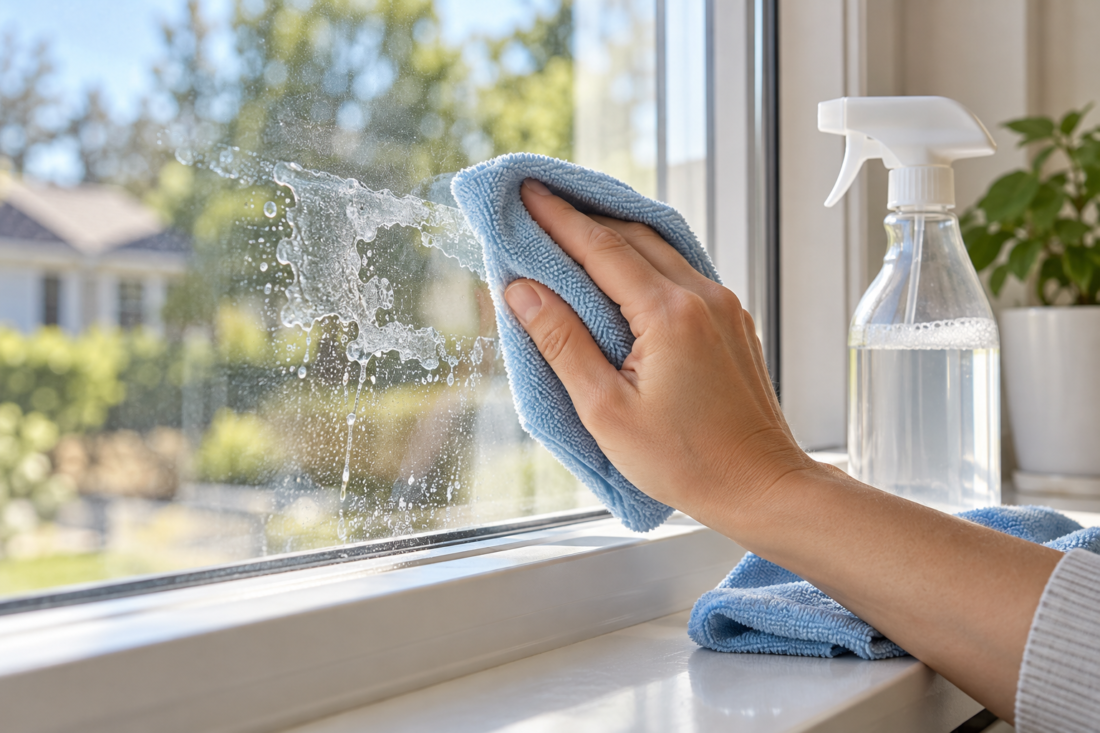
What’s the Best Window Film Adhesive Remover?
The best window film adhesive remover depends on the residue, the glass, and the product’s instructions. For light residue, a gentle soap-and-water solution may be a reasonable first step. Stubborn residue may need a product labeled for adhesive removal.
This guide covers residue left after removing the film. It explains what to try, how to apply a remover, and when to seek professional help.
Key Takeaways
- Start with a gentle method and follow the remover’s label.
- Isopropyl alcohol or a commercial adhesive remover may help with tougher residue, but check surface compatibility first.
- Cleaning advice for ammonia varies by film product. Follow the manufacturer’s instructions.
- Avoid abrasive scrubbers and use blades only if the glass and product guidance allow them.
- Test cleaners in an inconspicuous area, especially near coatings, frames, and seals.
The Short Answer
Start with the gentlest option that the film and glass instructions allow.
A mild soap-and-water solution may help with light residue. For tougher adhesive, a labeled remover or isopropyl alcohol may be appropriate if it is compatible with the glass and nearby materials. Do not assume a cleaner or tool is safe for every window.
Adhesive Remover Options
Soap and Water
A mild soap-and-water solution is a gentle first option for light residue. Apply it to the affected area and let it sit for the time recommended by the product instructions before wiping. If the residue remains, avoid scrubbing harder and consider another method.
Isopropyl Alcohol
Isopropyl alcohol may help loosen some adhesive residue. Check the label and test it on a small, inconspicuous area first, especially near painted or vinyl frames, seals, and coatings. Use it in a well-ventilated area, and keep it away from flames or heat.
Commercial Adhesive Remover
Some commercial products are labeled for adhesive residue on glass or other specific surfaces. Read the product label before use. Check compatibility with your glass, frame, and surrounding finishes, and test a small area first.
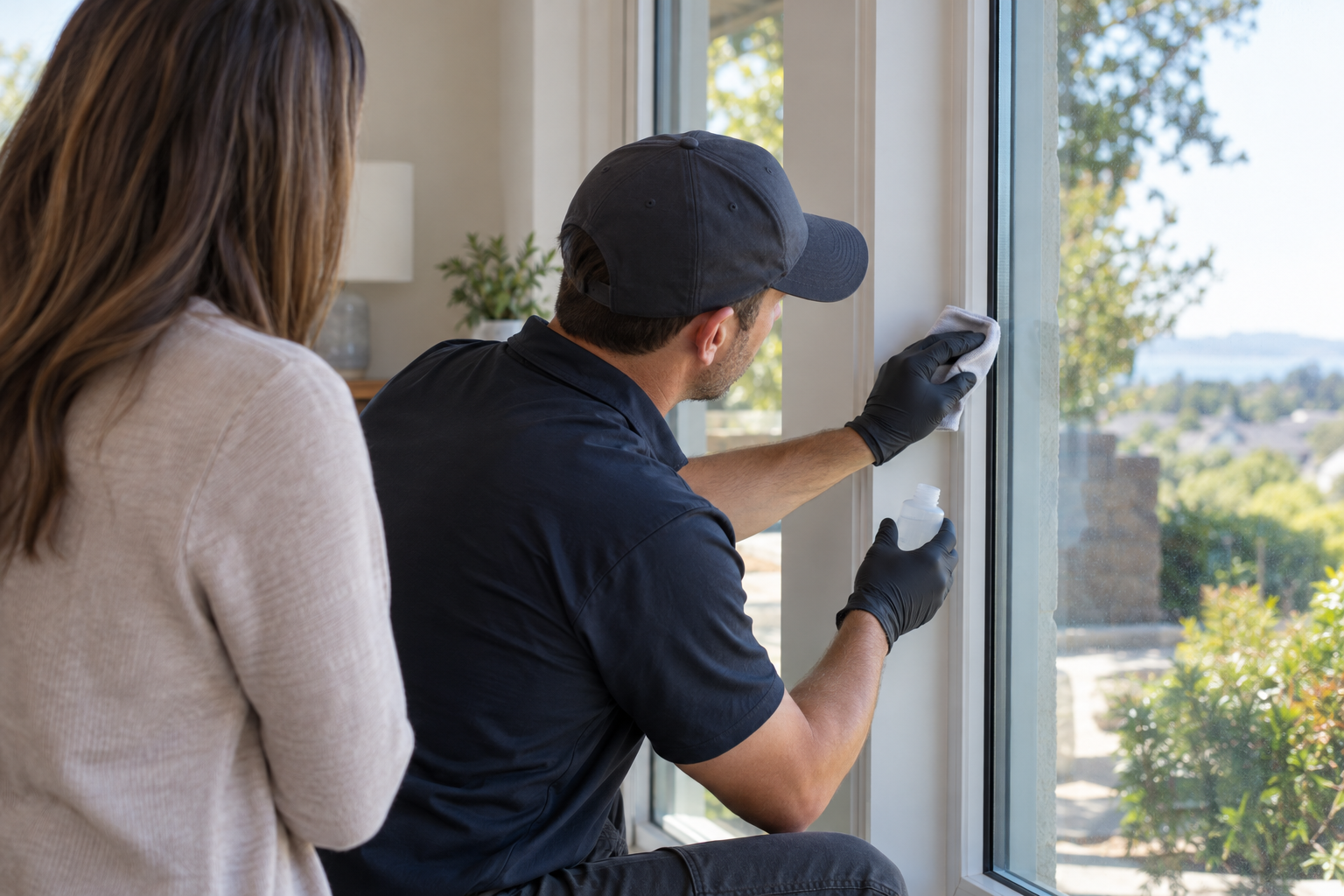
The Window Film Pros site offers general information about window film. For residue removal, follow the film manufacturer’s and cleaner manufacturer’s instructions.
Ammonia-Based Glass Cleaner
Do not assume ammonia is safe or unsafe for every window film. Instructions vary by product. For example, 3M says ammonia-based cleaners can be used on certain Sun Control films after they fully cure, while its FASARA finish instructions advise against ammonia. Follow the care instructions for the specific film.
If the film has already been removed, check that the cleaner is suitable for the glass and any nearby materials before using it on residue.
How to Apply a Remover
- Check the instructions. Confirm the cleaner is intended for the surface and follow its safety directions.
- Test a small area. Choose an inconspicuous spot and wait as directed to check for damage or discoloration.
- Apply the remover. Use the amount and dwell time stated on the label.
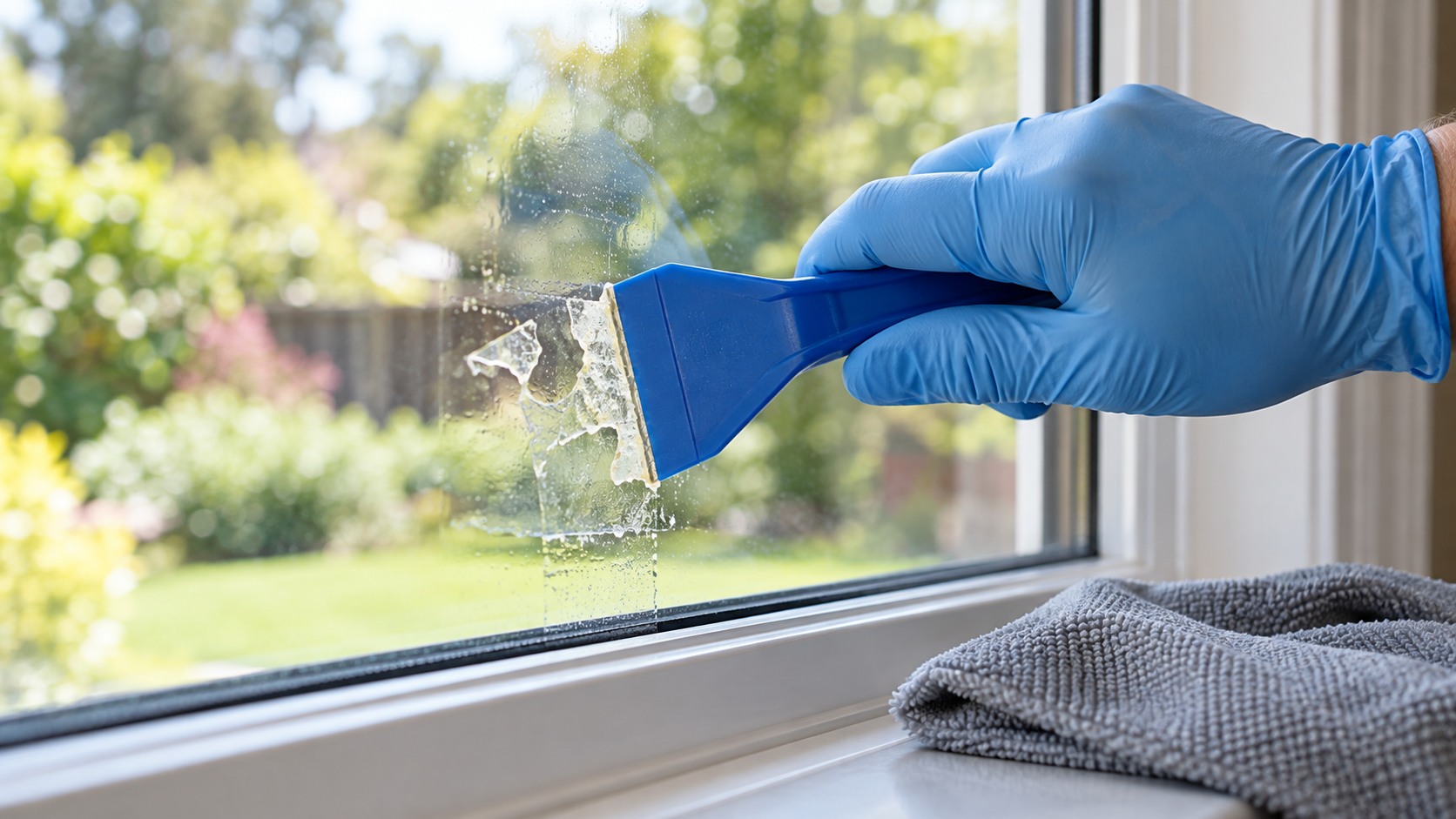
- Lift softened residue gently. Use a soft cloth or plastic scraper if the product instructions allow it.
- Repeat if necessary. Reapply the remover rather than scrubbing aggressively.
- Clean the area afterward. Follow the product directions for rinsing or wiping the glass and frame.
What to Avoid
- Abrasive pads and steel wool: These may scratch glass or damage a coating.
- Unapproved razor blades: A blade can damage some glass surfaces or coatings. Use one only if the glass and product instructions permit it.
- Unlabeled solvents: Check that a remover is suitable for the glass, frame, seals, and surrounding finishes.
- Mixing cleaners: Do not combine products unless their labels explicitly allow it.
- Using ammonia against the film maker’s advice: Cleaning guidance differs among film types.
Homemade and Commercial Options
A mild soap-and-water solution is inexpensive and may be enough for light residue. A commercial adhesive remover may help if residue remains, but its suitability depends on the product and the surfaces around the window.
For a large project or difficult residue, compare the time and risk of repeated DIY attempts with the cost of professional removal.
Comparison Table
| Remover option | Best use | What to check |
|---|---|---|
| Mild soap and water | First attempt on light residue | Follow cleaner and film instructions |
| Isopropyl alcohol | Some adhesive residue | Compatibility with glass, frame, seals, and coatings |
| Commercial adhesive remover | Residue that resists gentler methods | Label directions and surface compatibility |
| Ammonia-based glass cleaner | Only where product guidance permits | Film care instructions and glass compatibility |
Conclusion
No single window film adhesive remover works for every window. Start with a gentle method, check the product instructions, and test any cleaner on a discreet area. Avoid abrasives and unapproved blades, especially around coated glass. If the residue is difficult to remove or you are unsure about the glass, contact a professional before proceeding.
Frequently Asked Questions
Is ammonia-based glass cleaner safe to use on window film?
It depends on the film. Some manufacturer instructions permit ammonia-based cleaner after the film has fully cured, while others prohibit it. Check the care instructions for your specific product.
Will isopropyl alcohol damage my glass or window frame?
It may be suitable for some residue on glass, but compatibility varies for frames, seals, and coatings. Check the label, ventilate the area, and test a small spot first.
How do I know whether I need a commercial remover?
Try a gentle method first if the product instructions allow it. If the residue remains, check whether a commercial remover is approved for your glass and frame.
Can I use a razor blade to remove adhesive?
Only if the glass and product instructions permit it. Blades may damage certain glass surfaces or coatings, so a plastic scraper or professional help may be safer.
Does old window film leave more stubborn residue?
It can. Adhesive that has remained on glass for a long time may be harder to remove, but the result depends on the film and conditions. Follow the remover’s label.
Can these products damage Low-E glass?
Some glass coatings may be sensitive to particular chemicals or tools. Check the glass or film manufacturer’s guidance before applying a remover or using a blade.
Should I make my own citrus-based remover?
Use a product with clear instructions for the surface you are cleaning. Before applying any homemade or commercial mixture, check that it is suitable for the glass, frame, and nearby finishes.
When should I hire a professional?
Ask for professional help if the residue won’t come off, the glass has a special coating, or you are unsure which cleaners and tools are safe.
How long should I let a remover sit?
Use the dwell time on the product label. If the residue remains, follow the directions for another application instead of leaving the product on longer than recommended.
Can I use the same remover on glass and the window frame?
Not necessarily. Frame materials and finishes can react differently to cleaners. Check the label and test the frame separately.
Dealing With Stubborn Adhesive Residue?
If the residue is difficult to remove or you are concerned about damaging the glass, contact Michigan Glass Coatings for guidance on your window.