info@michgc.com

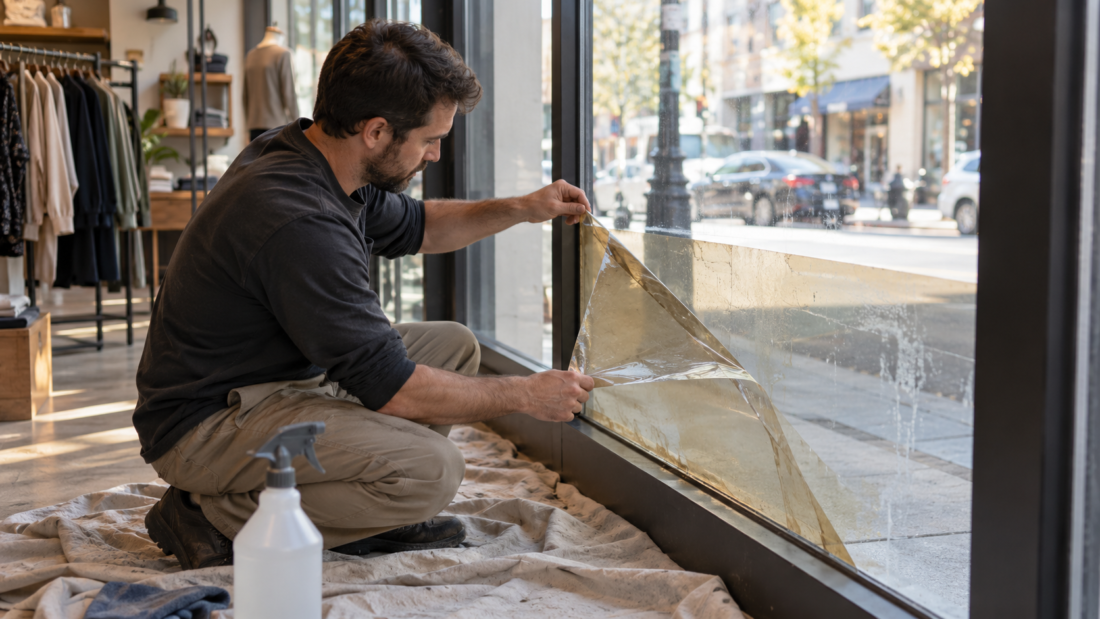
Removing Old Window Film: What Determines How It Goes
Removing old window film is usually doable, but two people can have completely different experiences depending on a few key factors. One person might peel an entire window clean in minutes. Another might spend an hour fighting adhesive residue on a single pane. The difference almost never comes down to luck. It comes down to film age, film type, glass type, and the tools being used.
Whether you’re dealing with a single residential window or a bank of commercial storefront glass, understanding what actually drives difficulty before you start saves time and prevents a frustrating afternoon. This guide breaks down the factors that determine how your specific removal job will go, walks through the basic process, and covers when it’s worth calling in a professional instead.
Key Takeaways
- Removal difficulty depends primarily on four factors: film age, film type, glass type, and the tools and method used.
- Older, sun-exposed film tends to release more easily than newer film, since UV exposure breaks down adhesive over time.
- Security and safety film use stronger adhesive systems by design, making them considerably harder to remove than standard privacy or solar film.
- Commercial glass and larger panels raise the stakes, since scratches or coating damage cost more to fix at scale.
- Diagnosing your specific situation before you start separates a quick job from a frustrating one.
The Short Answer
Removing old window film is generally straightforward, but difficulty varies significantly based on the film’s age, type, and the glass it’s applied to. Older, sun-exposed privacy or solar film tends to come off easily, while newer film and especially security-grade film can be considerably more stubborn. Knowing your situation before you start is more useful than following one generic set of steps.
The Four Factors That Determine Difficulty
Film Age and Sun Exposure
Film that’s been exposed to years of direct sunlight tends to release more easily, since UV exposure gradually breaks down the adhesive bond holding it to the glass. This is why film that’s already peeling or bubbling at the edges usually comes off in larger, cleaner sections than newer film still fully bonded.
Film Type (Privacy, Solar, or Security)
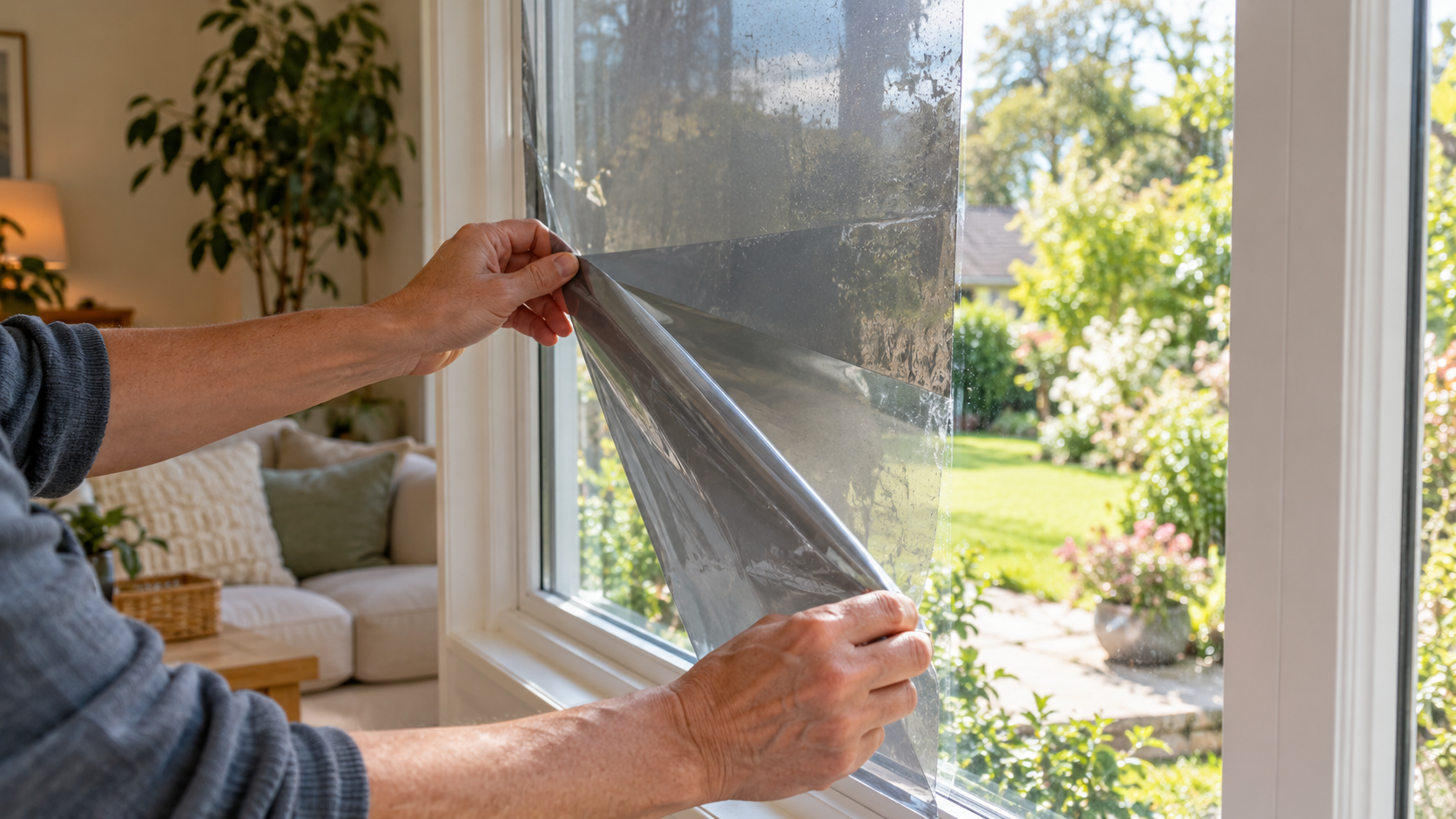
Standard privacy and solar window film use adhesive systems designed for straightforward application and eventual removal. Security and safety film is built differently, using stronger adhesive specifically engineered to keep the film bonded to the glass even under impact. Window Film Pros notes that removal difficulty varies significantly across film categories for exactly this reason, with security-grade adhesive systems consistently requiring more time and care than standard residential film.
Glass Type and Coatings
Standard glass generally tolerates the removal process well. Glass with a Low-E coating or other specialty treatment requires more care, since aggressive scraping can damage the coating itself, not just the film on top. Tempered glass, common in commercial storefronts and larger residential panels, is also more prone to chipping at the edges under excessive pressure.
Tools and Method Used
The right combination of heat and moisture makes the biggest difference in removal, regardless of film type. A heat gun or hair dryer paired with soapy water or an ammonia-based solution loosens adhesive far more effectively than attempting to peel dry film with a blade alone, which is one of the most common reasons a removal job goes badly.
The Basic Removal Process
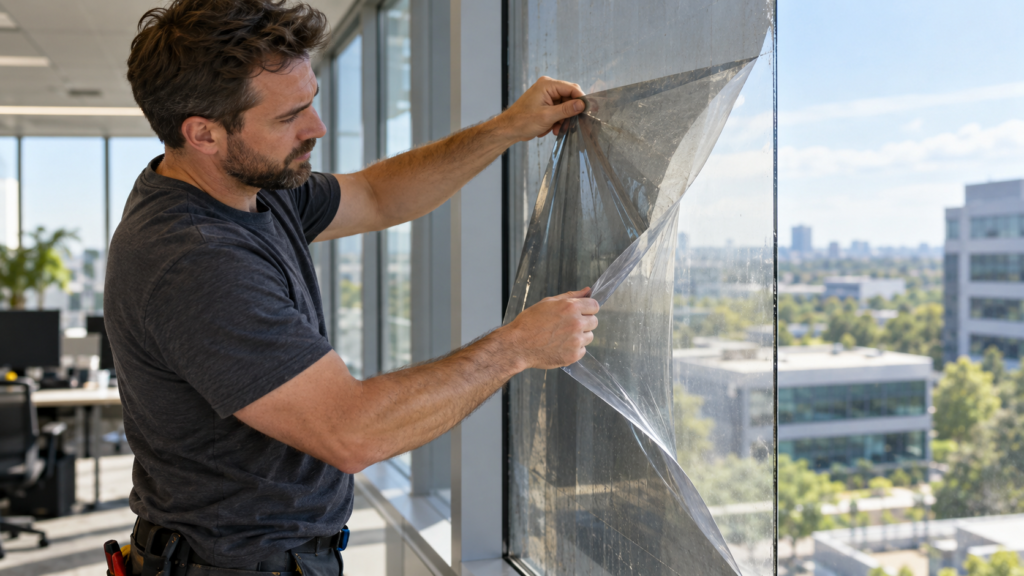
- Apply heat. Warm a section of the film with a heat gun or hair dryer to soften the adhesive underneath.
- Lift a corner. Use a plastic scraper to gently work up an edge once the film feels warm and pliable.
- Apply the solution. Spray soapy water or diluted ammonia solution behind the film as you peel, letting it soak into the adhesive.
- Peel in sections. Work in strips rather than trying to remove an entire window at once, reapplying heat and solution as needed.
- Clean the glass. Once the film is off, scrape away remaining adhesive residue and wash the glass thoroughly.
Signs Your Removal Job Will Be Difficult
- The film is a security or safety product rather than standard privacy or solar film
- The film has never been removed or replaced and shows no signs of peeling on its own
- The glass has a Low-E coating, is tempered, or is part of a larger commercial storefront installation
- You’re working with multiple large panels where mistakes are costly to fix
Common Mistakes That Make Removal Harder Than It Needs to Be
- Trying to peel film dry, without enough heat or solution, which causes it to tear into small pieces instead of coming off in strips
- Using a metal blade too aggressively, risking scratches on the glass surface
- Scraping directly on coated glass without care, which can damage the coating itself
- Rushing the process on a large commercial job without a plan for sequencing multiple panels
When to Call a Professional Instead
Consider professional removal when the film is a security or safety product, when the glass is tempered or Low-E coated, when it’s part of a larger commercial installation, or when you’re planning to install new film right after and want to avoid doing surface prep twice. For a single older residential window with standard film, a DIY approach is usually a reasonable, manageable project.
Conclusion
Removing old window film isn’t a one-size-fits-all task; its difficulty depends heavily on what you’re actually working with. Older, sun-worn residential film is often a straightforward weekend project. Security film, tempered glass, and larger commercial installations raise both the difficulty and the stakes if you make a mistake. Knowing which situation applies to your windows before you start turns removal from a guessing game into a manageable task.
Frequently Asked Questions
How can I tell if my film will be easy or hard to remove?
Check the film’s age and type first. Older film that’s already peeling at the edges is usually easier, while newer film or security-grade film tends to be more stubborn regardless of age.
Is commercial window film removal different from residential removal?
The basic process is similar, but commercial jobs often involve larger panels, tempered glass, and higher costs if something goes wrong, so careful sequencing and technique matter more at scale.
Why did my film tear into small pieces instead of coming off in strips?
This usually means the adhesive wasn’t heated or soaked long enough before peeling. More heat and solution before continuing typically produces longer, cleaner strips.
Is security film always harder to remove than regular tint?
Generally yes, since security and safety film use stronger adhesive systems by design, which is part of what makes them effective for their intended purpose.
Can removing old film damage my windows?
It can, if you use a metal blade too aggressively or scrape coated glass without care. Careful technique with the right tools significantly reduces that risk.
How long does removal typically take per window?
A single average window usually takes 20 to 45 minutes, depending on the film’s age and adhesive strength, though commercial panels or difficult films can take longer.
Should I remove old film myself if I’m installing new film right after?
You can, but a combined professional removal-and-install service often saves time and reduces the risk of damaging the glass before new film goes on, especially for larger or commercial projects.
Not Sure What You’re Dealing With?
Whether it’s a single home window or a full commercial storefront, knowing what’s actually driving the difficulty of your removal is the first step to getting it done right. Contact us to talk through your specific windows and whether a DIY approach or professional removal makes more sense for your project.