info@michgc.com

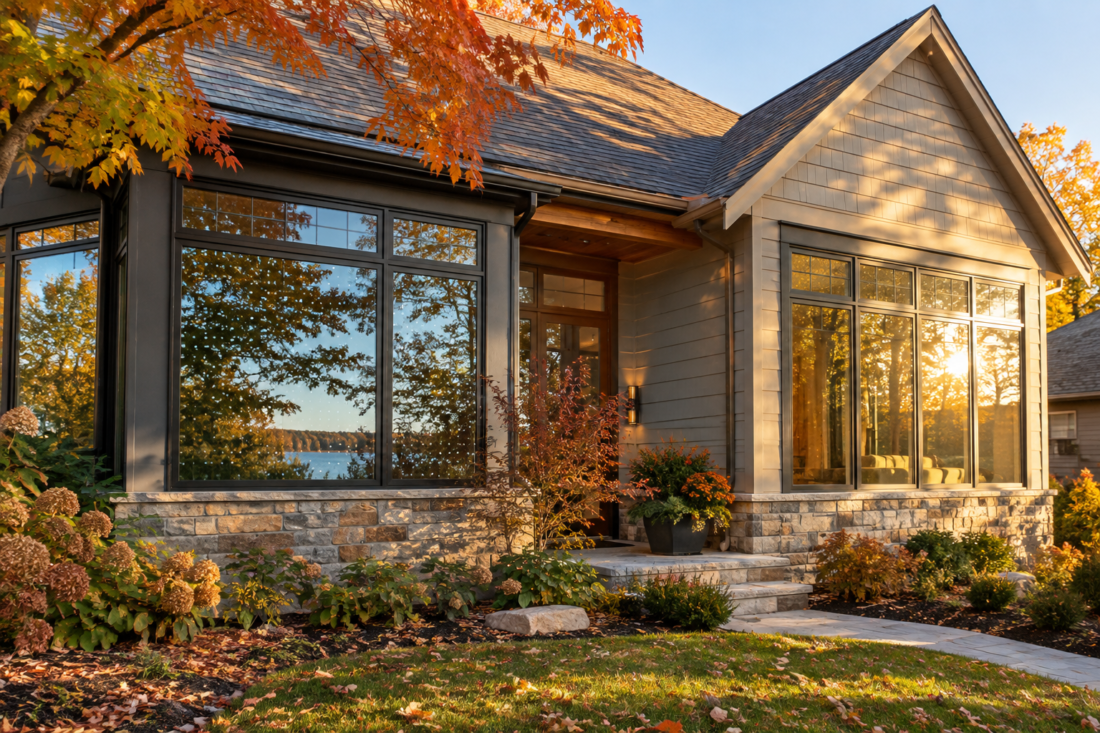
Solar Control and Bird-Safe Window Film for Grand Rapids Homes
Homeowners in Grand Rapids may consider window film for different reasons. Solar-control film can help manage heat, glare, and UV exposure. Bird-safe treatments make glass more visible to birds and help reduce collision risk.
These goals differ, and a home may need one, both, or neither. The right choice depends on each window’s sun exposure, reflections, surrounding vegetation, and the product’s documented performance.
Key Takeaways
- Solar-control film addresses heat, glare, and, depending on the product, UV exposure.
- Bird-safe products use patterns or other visual markers to make glass more visible to birds.
- Trees, sky reflections, and clear sightlines through a home can contribute to collision risk.
- Different windows on the same home may need different treatments.
- Review product specifications and samples before choosing film.
Why Homeowners May Consider Both
A west-facing room may become uncomfortable on sunny afternoons, while another window may reflect trees or offer a clear view through the home. These situations call for separate assessments.
Grand Rapids and the wider West Michigan region experience seasonal bird migration. Michigan Audubon notes that window collisions can occur year-round and increase during spring and fall migration. That regional context does not mean every home has the same risk. Look at the individual windows, their reflections, and any history of bird strikes.
Solar-Control Film for Sun-Exposed Windows
Solar-control film is designed to manage the sunlight entering through glass. Depending on the product, it may reduce heat, glare, and UV transmission. Results vary by film, glass type, window orientation, and installation.
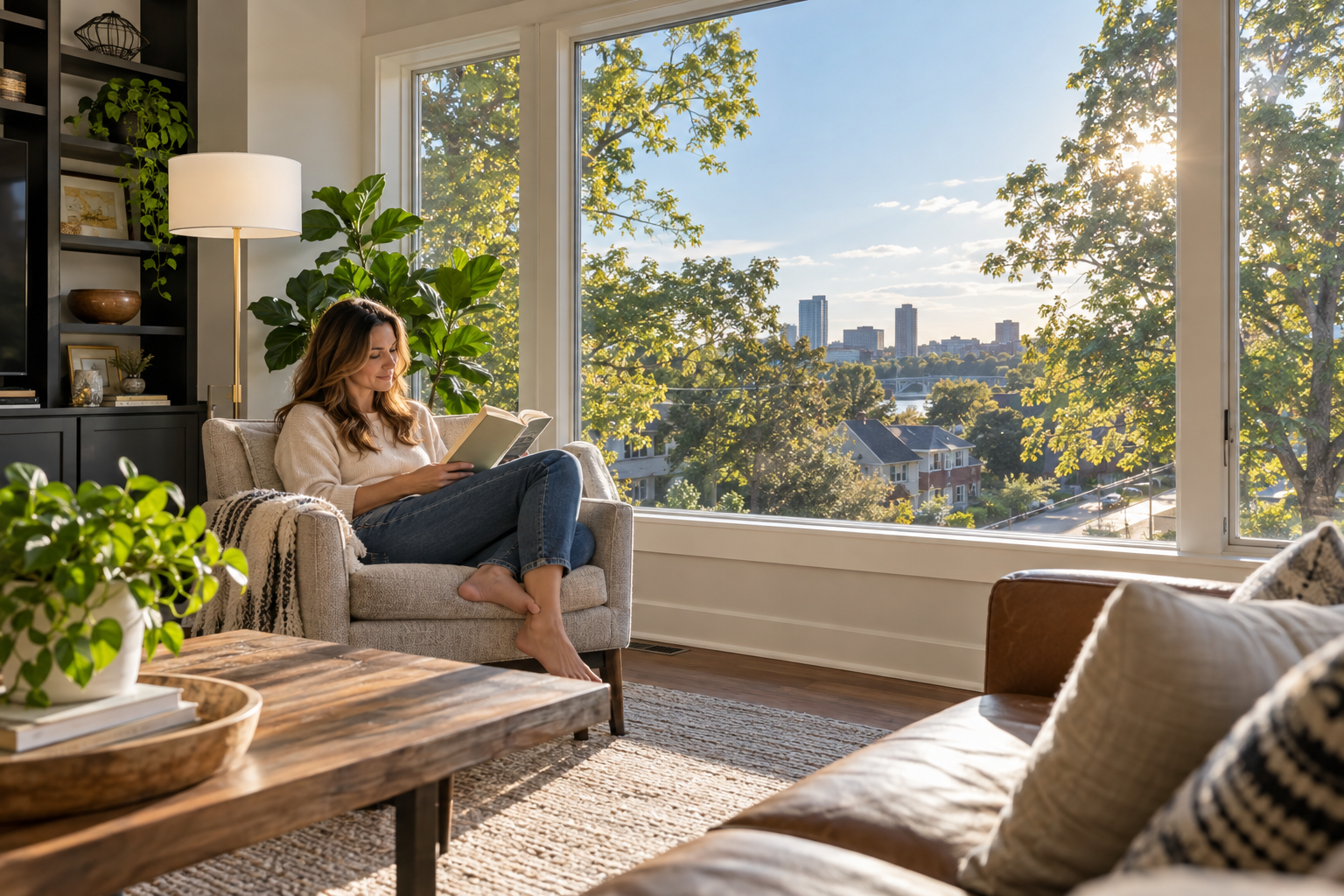
South- and west-facing windows may receive strong sunlight at different times of day. If a room becomes hot or glare makes screens difficult to use, ask for product data that matches your glass. The International Window Film Association’s buying guidance recommends evaluating film benefits for the specific windows in question.
Bird-Safe Treatments for Windows at Risk of Collisions
Birds may collide with glass when it reflects nearby trees or sky, or when a clear view through a building appears to offer an open flight path. Windows facing vegetation, gardens, or reflective areas may warrant a closer look, especially if strikes have already occurred.
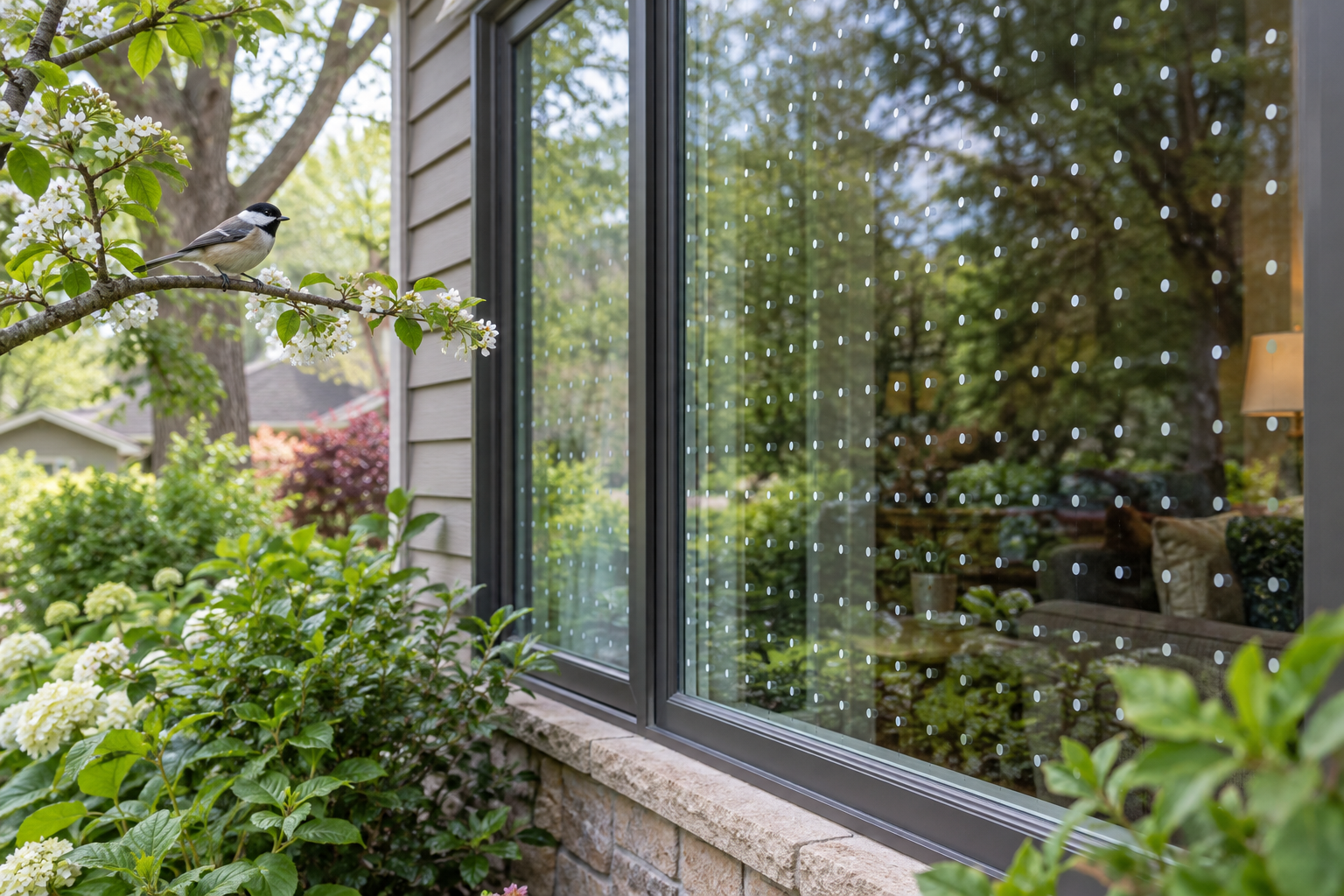
Bird-safe products use visual markers or patterns to make glass more visible. Product designs vary, so ask how the film works, where to install it, and what spacing is recommended. USGS guidance describes exterior patterns arranged in a close grid as one way to make windows more visible to birds.
No product should be presented as a guarantee that collisions will stop. Review the manufacturer’s instructions and consider a sample before selecting a treatment.
Can One Film Address Both Needs?
Some products may offer overlapping benefits, but do not assume a bird-safe film provides the level of solar control you need, or that solar-control film is designed to reduce bird collisions.
Ask the supplier for product documentation covering each goal. If different windows have different needs, separate products may be more appropriate.
How to Assess Your Windows
Review each window separately:
- Note the sun exposure. Record when heat or glare is most noticeable.
- Look for reflections and clear sightlines. Consider trees, sky, gardens, and views through the home.
- Record any bird strikes. Note the window location and time of year.
- Identify the main goal for each window. It may be solar control, bird collision reduction, or another need.
- Compare product details. Check performance data, installation location, appearance, and glass compatibility.
For local bird-collision information, Michigan Audubon’s guidance explains when collisions occur and points to Michigan monitoring efforts.
Phasing a Project
If you cannot treat every window at once, prioritize based on the problem you want to address. You might start with a room where heat and glare are affecting daily comfort, or a window where bird strikes have been observed.
Ask an installer to assess the selected windows and confirm that the proposed film is suitable for the glass. You can review other windows later if your needs or budget change.
Comparison Table
| Factor | Solar-control film | Bird-safe treatment |
|---|---|---|
| Main purpose | Manage heat, glare, and possibly UV exposure | Make glass more visible to birds |
| Windows to assess | Windows with notable sun exposure or glare | Windows with reflections, clear sightlines, or observed strikes |
| Product details to check | Solar and visible-light performance for your glass | Marker design, spacing, placement, and product guidance |
| Appearance | Varies by film | Varies by pattern or treatment |
Conclusion
Solar-control and bird-safe window treatments address different concerns. Assess each window’s sun exposure, reflections, and history of bird strikes before choosing. Compare product data, confirm glass compatibility, and avoid assuming one film will provide every benefit.
Frequently Asked Questions
Do I need bird-safe film if my home is not next to a forest?
Not necessarily. Risk depends on the window’s reflections, views through the glass, nearby vegetation, and any history of collisions. Check the specific windows rather than relying only on distance from a wooded area.
Is solar-control film worth considering in Michigan?
It may be useful for windows that receive strong sun or create uncomfortable heat and glare. The benefit depends on the product, glass, and exposure. Ask for performance details for your windows.
Can bird-safe film be applied only to certain windows?
Often, homeowners focus on windows with observed collisions or conditions that may increase risk. Ask the product manufacturer or installer which windows to treat and how to place the film.
Will bird-safe film change how my windows look?
Appearance depends on the product. Some treatments use visible patterns, while others use different marker designs. Review a sample from inside and outside before choosing.
How can I tell if a window may pose a bird-collision risk?
Look for reflections of trees or sky, a clear view through the home, nearby vegetation, and evidence of previous strikes. Michigan Audubon provides local information on window collisions and monitoring.
Can one product provide both solar control and bird-safe features?
Some products may offer overlapping features, but verify each benefit in the product documentation. Do not assume a film designed for one purpose performs equally well for the other.
Does lake-effect weather affect solar-control film performance?
Weather alone does not determine performance. The film, glass type, window orientation, and sunlight exposure all matter. Check product specifications for the actual windows.
Should I get a professional assessment before choosing film?
A qualified installer can review the glass, window orientation, and project goals, then recommend products suited to those conditions.
If I can only address one concern first, which should I prioritize?
That depends on your home. Consider how often heat or glare disrupts a room, whether bird strikes have occurred, and which windows are involved. Use those details to set priorities.
Do pools or water features increase bird-collision risk?
A water feature alone does not determine risk. Assess the window’s reflections, nearby vegetation, sightlines, and any observed collisions.
Considering Window Film for Your Grand Rapids Home?
Share which windows concern you and whether your priority is sun control, bird collisions, or both. Contact Michigan Glass Coatings to discuss the options for your home.