info@michgc.com

Solar Screens vs. Window Film: Which Fits Your Goal?
Solar screens and window film can both help manage sunlight, but they work differently and affect a building differently. The right choice depends on your windows, how much sun they receive, your preferred look, and whether you need adjustable or branded coverage.
This guide compares the two options and explains what to check before deciding. Performance and installation requirements vary, so use product-specific information when comparing them.
Key Takeaways
- Solar screens sit outside the glass; window film is applied directly to the glass.
- Heat and glare performance vary by product, screen design, glass type, and installation.
- Both options can affect views and a window’s appearance.
- HOA, landlord, and building rules may apply, especially to exterior installations.
- Compare product data, installed cost, maintenance needs, and warranty before choosing.
The Short Answer
Neither solar screens nor window film is the best choice for every window.
Exterior screens can shade a window before sunlight reaches the glass, while window film changes how sunlight passes through or interacts with the glazing. Compare the specific products against your main goals, such as heat reduction, glare control, appearance, branding, or seasonal flexibility.
How Solar Screens and Window Film Work
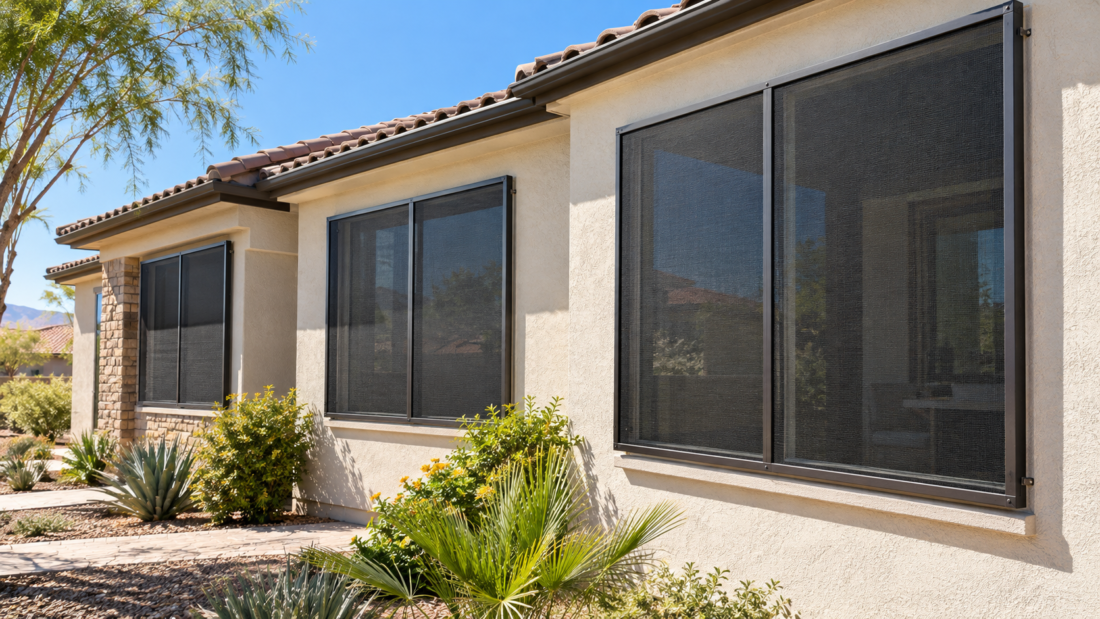
Solar screens are mesh panels installed outside a window. They shade the glass while still allowing some light and visibility through the mesh. Their openness, color, and design affect the result.
Window film is applied to the glass. Depending on the product, it can reflect or absorb solar energy and change how much light, glare, or UV passes through. Performance varies by product and glass type.
Exterior shading can help reduce solar heat gain, while window film performance should be checked using the specifications for the film and glazing being considered.
Choose Based on Your Main Goal
Reducing Solar Heat Gain
Both options can help manage sunlight, but avoid assuming one will always outperform the other. Ask for performance information for the specific screen or film and the glass it will be installed on. For film, 3M publishes information about its window film products and their features.
Managing Exterior Appearance or Building Rules
Solar screens are visible on the outside of a building. Window film may make a less noticeable change, but tinted or reflective film can also affect the exterior appearance.
If you live in a community with an HOA or rent your home, check the applicable rules before installing either option. Requirements vary, and you shouldn’t assume a product is permitted without confirmation.
Adding Branding to Commercial Glass
Some window films can incorporate custom graphics, logos, or patterns. This may suit a storefront or office that wants to use glass for branding as well as sun control. Check whether the chosen film supports the design and ask to review a proof or sample.

Adjusting Coverage Seasonally
Some solar screen systems can be removed or adjusted, while others are fixed in place. Window film is not typically adjusted day to day, but removal may be possible depending on the product and installation.
If seasonal flexibility matters, ask how the specific screen is mounted and whether the film can be removed without damaging the glass or affecting its warranty.
Managing Heat, UV, and Glare in an Office
Film products vary in how they affect heat, UV, visible light, and glare. Review the product’s performance data for your building’s glass, and consider how much daylight and view you want to retain. The 3M home window solutions page provides general information about 3M window films; use the relevant product data sheet for a detailed comparison.

Visibility and Glare
Solar screens add mesh in front of the window, which can change the view and how much daylight enters the room. The effect depends on the mesh design and openness.
Window film can also change the view, brightness, or reflection, depending on its tint and construction. If appearance is important, review samples from both inside and outside before choosing. A sample can help, but ask the supplier whether it accurately represents the installed product.
Cost and Maintenance
Solar screen costs may include measuring, frame fabrication, and installation. Maintenance and seasonal handling depend on the screen system.
Window film is installed directly on the glass. Its maintenance and expected service life depend on the product and installation. Compare the full installed cost, warranty, care instructions, and likely replacement or removal costs rather than relying only on the initial quote.
Comparison Table
| Consideration | Solar screens | Window film |
|---|---|---|
| Installation location | Outside the glass | Applied to the glass |
| Heat and glare performance | Varies by mesh and window | Varies by film and glass |
| Exterior appearance | Screen is visible | Appearance varies by film |
| HOA or lease requirements | Check rules for exterior changes | Check rules for window treatments or alterations |
| Branding | Not typically designed for graphics | Some films support custom graphics |
| Maintenance | Depends on screen system | Depends on film and installation |
| Adjustability or removal | Depends on how the screen is mounted | Removal depends on the film and installation |
Conclusion
Solar screens and window film address sunlight differently. Compare the actual products against your priorities, including heat and glare performance, appearance, rules, maintenance, and flexibility. Ask for product specifications that match your glass, review samples, and compare written quotes before deciding.
Frequently Asked Questions
Can I use solar screens on some windows and film on others?
Yes, different windows can use different treatments if the products suit the glass and installation conditions. Check compatibility and building rules before combining options.
Do commercial buildings typically choose film over screens?
The choice depends on the building’s goals and design requirements. Film may be useful when the project includes branding or when an exterior screen doesn’t suit the appearance, but compare specific products and rules.
Is window film an option if my HOA does not allow solar screens?
It may be. Check your HOA rules for window film, too, since tinted or reflective products can change the building’s appearance. Compare the film’s performance data with your heat and glare goals.
How often do solar screens need maintenance?
It depends on the screen system, location, and exposure. Ask the manufacturer or installer about cleaning, inspection, and any seasonal removal or storage.
Does window film reduce glare on screens and work surfaces?
Some films reduce glare, but the effect varies by product. Review the film’s visible light transmission and glare information, and consider testing a sample in the room.
Can solar screens be added after window film is installed?
That depends on the window, screen design, film, and any HOA or lease rules. Ask a qualified installer to assess the combination before adding an exterior system.
Are energy rebates available for either option?
Programs vary by location and change over time. Check with your utility provider or local government for current eligibility requirements.
Which option has a better return on investment?
There is no universal answer. Compare the installed price, expected service life, maintenance, warranty, and potential energy effects for the specific products and windows.
Do solar screens only make sense in very hot climates?
Not necessarily. Their usefulness depends on sun exposure, window orientation, climate, and your goals. Ask for product information relevant to your building rather than choosing based on climate alone.
Can window film be removed later?
Some window films can be removed, but the process depends on the product and installation. Ask the manufacturer or installer about removal, potential residue, and any effect on the glass or warranty.
Not Sure Which Fits Your Situation?
Share your main goal, window type, and any HOA or lease requirements. Contact us to discuss window film options and what to consider when comparing them with solar screens.