info@michgc.com
Di-Noc Architectural Resurfacing: A Smarter Renovation Path for Detroit Office Buildings
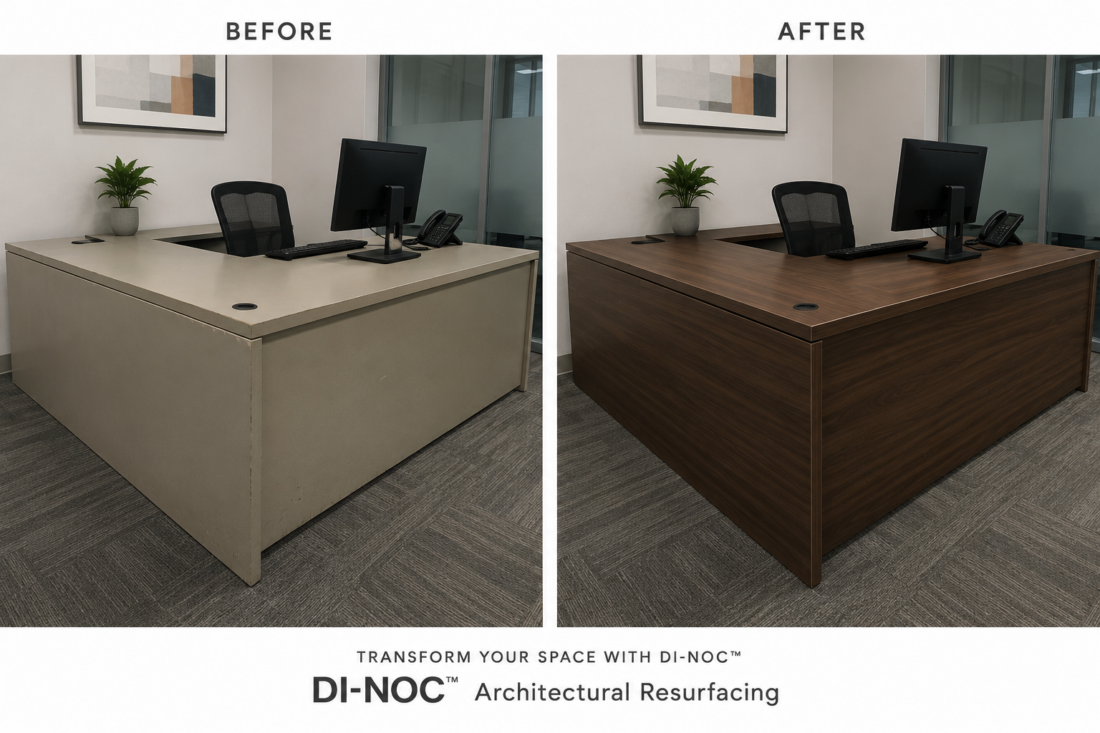
Di-Noc architectural resurfacing for Detroit office buildings is giving property managers and building owners a faster, lower-cost path to competitive interior finishes at a time when tenant retention pressure in the metro market has never been more direct. Detroit’s office stock, from the Midtown and New Center corridors to Southfield’s suburban towers and Troy’s corporate campuses, includes a significant volume of buildings where elevator cabs, lobby surfaces, reception desks, and corridor millwork have aged past the point of looking current without the capital budget available for full demolition and rebuild.
Michigan Glass Coatings installs Di-Noc architectural resurfacing for commercial properties throughout Detroit and the surrounding areas, including Southfield, Troy, Birmingham, Dearborn, and Royal Oak, delivering premium surface finishes in days rather than weeks at a fraction of replacement cost.
Why Detroit Office Owners Are Rethinking Renovation in 2026
The Detroit office market is navigating a tenant landscape that has shifted significantly since 2020. Hybrid work has changed how tenants use and evaluate space, and the buildings winning renewals and new leases in 2026 are the ones that feel current, well-maintained, and worth the commute. Buildings that have not addressed aging finishes in their common areas are losing prospects to newer products and to competitors who have invested in visual upgrades.
The challenge for many Detroit Class B building owners is that the capital required for a full lobby or elevator renovation is difficult to justify, given uncertain leasing conditions. A full lobby rebuild, including demolition, millwork fabrication, installation, and finishing, can cost tens of thousands of dollars and take six to eight weeks in an occupied building. That timeline and cost are difficult to absorb when the payoff is uncertain.
Di-Noc resurfacing changes the calculation. The same visual upgrade that a full renovation delivers, in terms of how the space reads to a tenant walking through on a tour, is achievable in days rather than weeks and at a cost that is 60 to 80 percent lower than full replacement, for Detroit building owners who need to stay competitive without betting a full renovation budget on a single leasing outcome, that makes resurfacing the most practical available tool.
What Is 3M Di-Noc Architectural Finish?
3M Di-Noc is a commercial-grade architectural film manufactured by 3M and engineered for application to existing interior surfaces in commercial buildings. It is available in over a thousand individual finish options, covering wood grain, brushed and polished metal, stone, concrete, textile, and solid-color treatments, at varying gloss levels and surface textures.
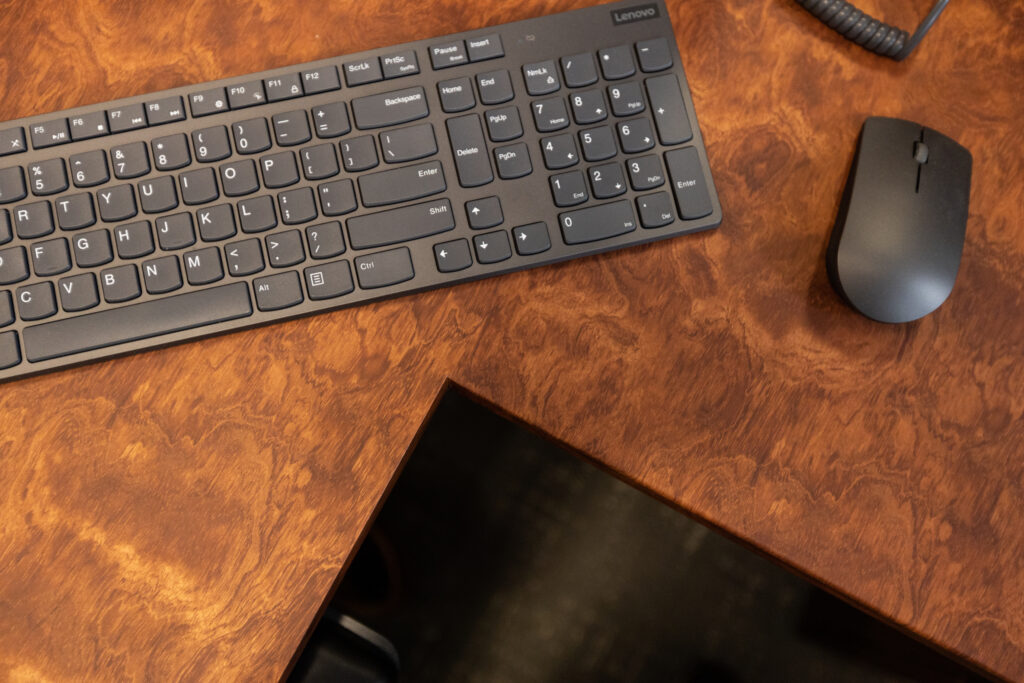
The film bonds directly to existing substrates, including metal, laminate, painted drywall, wood veneer, and most other smooth interior surfaces, without requiring the substrate to be removed. The result at normal commercial interior viewing distances is visually consistent with the material it references. A brushed steel Di-Noc finish on an elevator cab panel reads as brushed steel. A walnut grain finish on a reception desk fascia reads as walnut.
How Di-Noc Differs From Vinyl Wraps and Laminates
Di-Noc is a different product category from standard vinyl wraps and decorative laminates, both in material specifications and application standards. It is produced to a commercial durability specification that is tested for abrasion resistance, chemical resistance, and adhesion performance in high-traffic interior environments. Standard vinyl wraps and decorative laminates are typically specified for lower-traffic and shorter-term applications and do not carry the same commercial performance ratings.
For Detroit office buildings where elevator cabs and lobby surfaces receive daily contact from hundreds of occupants, the durability specification of Di-Noc is a meaningful difference from lower-grade products that may look similar in a sample but perform differently over the installation’s service life. Decorative window film for offices from Michigan Glass Coatings pairs naturally with Di-Noc resurfacing for properties looking to address lobby glass, conference room partitions, and corridor glazing as part of the same interior refresh.
Where Di-Noc Resurfacing Works in Commercial Buildings
Elevator Cabs, Lobby Walls, and Reception Desks
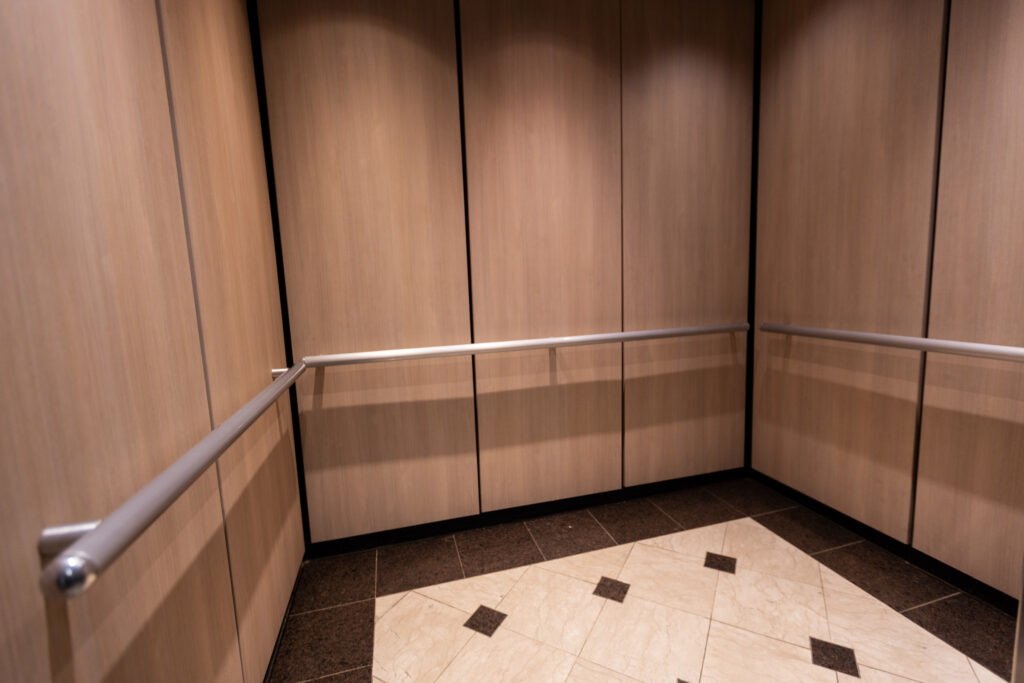
Elevator cabs are the highest-priority Di-Noc application in most Detroit commercial buildings because they interact with every occupant every day. Scratched stainless steel panels, worn laminate walls, and dated wood veneer in elevator interiors immediately and consistently communicate the building’s age. Resurfacing cab panels with a current brushed metal, natural wood grain, or stone finish takes one day per cab. It yields a premium upgrade that remains evident throughout the building’s remaining service life.
Lobby feature walls, reception desk fascias, and column bases are the second-highest priority category. These surfaces set the first impression for every tenant, prospect, and visitor who enters the building, and updating them with Di-Noc delivers the visual result that leasing teams need without rebuilding the lobby from scratch.
Corridor door faces, tenant suite entry millwork, and common area casework round out the standard Detroit commercial resurfacing scope. Resurfacing these elements refreshes entire floors without the construction timeline and tenant disruption that traditional corridor renovation creates in an occupied building.
Cost and Timeline: Di-Noc vs. Full Replacement
The numbers on this comparison are consistent across the Detroit commercial market. A full elevator cab interior replacement, involving demolition, new panel fabrication, installation, and finishing, typically runs $10,000 to $25,000 per cab, depending on size and specifications. A Di-Noc resurfacing of the same cab typically runs 60 to 80 percent less and is completed in a single day.
A full lobby renovation covering reception surfaces, feature walls, and column bases in a mid-size Detroit office building typically runs four to eight weeks. The equivalent Di-Noc resurfacing scope typically runs three to five days. The building remains fully operational and professional-looking throughout the installation, and the finished result is available for leasing, photography, and tenant review within days of the project start.
For Detroit property managers working against a lease renewal deadline or preparing a building for disposition, that timeline advantage is as valuable as the cost savings.
What to Look for in a Detroit Di-Noc Installer
The quality of a Di-Noc installation depends as much on the installer as on the material. Detroit property managers evaluating installers should look for a contractor who can specify Di-Noc products by the exact finish code, provide physical samples for review before installation, assess substrate condition, identify preparation requirements before committing to a scope, and provide written installation documentation, including product specifications and the coverage area for each surface.
Michigan Glass Coatings provides full written documentation for every Detroit commercial resurfacing project, specifies products matched to the specific substrate and traffic conditions of each surface, and coordinates installation schedules around the building’s occupancy calendar to minimize disruption to tenants and building operations.
Contact Michigan Glass Coatings today to schedule a Detroit building assessment and get a Di-Noc resurfacing scope tailored to your tenant retention priorities, leasing timeline, and improvement budget.
Frequently Asked Questions
How long does Di-Noc architectural film last in a high-traffic Detroit lobby?
Commercial-grade Di-Noc film for interior lobby applications is typically rated for 7 to 12 years under normal use conditions. Lifespan varies based on the specific surface, daily traffic level, and cleaning protocol. High-contact surfaces, such as elevator cab panels and reception desk fascias that receive daily touch and regular cleaning, are at the lower end of the lifespan range compared to feature walls and column wraps that are not regularly handled. Michigan Glass Coatings provides care and maintenance guidelines with every installation so that building maintenance staff use appropriate products that protect the film and support its full service life.
Can Di-Noc be installed over existing wood, metal, or laminate without removal?
Yes. Di-Noc bonds directly to existing wood veneer, metal panels, laminate, painted drywall, and most other smooth interior substrates without removing the underlying surface. The substrate must be structurally sound, clean, and free of significant delamination or surface damage. Surfaces with lifting edges, peeling veneer, or deep surface defects require repair before film can be applied successfully. Michigan Glass Coatings assesses the condition of each target surface during the site assessment and identifies preparation requirements before the project scope is finalized.
Is Di-Noc resurfacing more affordable than replacing elevator interiors?
Yes, significantly. Di-Noc resurfacing of an elevator cab interior typically costs 60 to 80 percent less than full demolition and replacement of the same cab. The savings come from eliminating demolition labor, disposal costs, fabrication lead time, and the extended installation timeline required by replacement. For Detroit office buildings with multiple elevator cabs, the cumulative cost difference between a full resurfacing project and a full replacement is substantial. It often determines whether a building improvement project is financially viable within the available capital budget.
How disruptive is a Di-Noc installation for a working office building?
Di-Noc installation produces no demolition noise, construction dust, or debris. Crews work quietly and cleanly within the surfaces being treated. For elevator cab installations, each cab is taken out of service for 1 day and returned to full operation the following morning. For lobby and corridor installations, work is typically completed zone by zone without construction barriers or tenant access restrictions. Michigan Glass Coatings coordinates all Detroit commercial installations around the building’s occupancy calendar and tenant access requirements, and can schedule work during early-morning, evening, or weekend windows for buildings where daytime activity near tenant spaces is a concern.