info@michgc.com
Window Film Designs: A Guide to Your Options
Window film comes in a range of decorative styles, from frosted finishes and geometric patterns to custom graphics. The right choice depends on what the glass needs to do. You may want more privacy, a branded feature, or a decorative accent.
This guide compares common window film designs, explains how coverage affects the result, and outlines what to expect when ordering a custom design.
Key Takeaways
- Decorative window film is available in frosted, patterned, colored, and custom styles.
- Start by deciding whether privacy, branding, or appearance matters most.
- The pattern and coverage affect how much of the view is obscured.
- Custom designs usually require artwork review and approval before production.
- Ask for a sample, product details, and a written quote before choosing.
Popular Window Film Design Categories
Frosted and Etched-Look Patterns
Frosted and etched-look films create a translucent appearance that can soften views through glass. Finishes vary by product: some are plain and uniform, while others add texture or sheen.
These films can suit bathrooms, office partitions, and other areas where you want to obscure a view while keeping the glass bright. Review a sample to see how much detail and light pass through.
Geometric and Modern Patterns
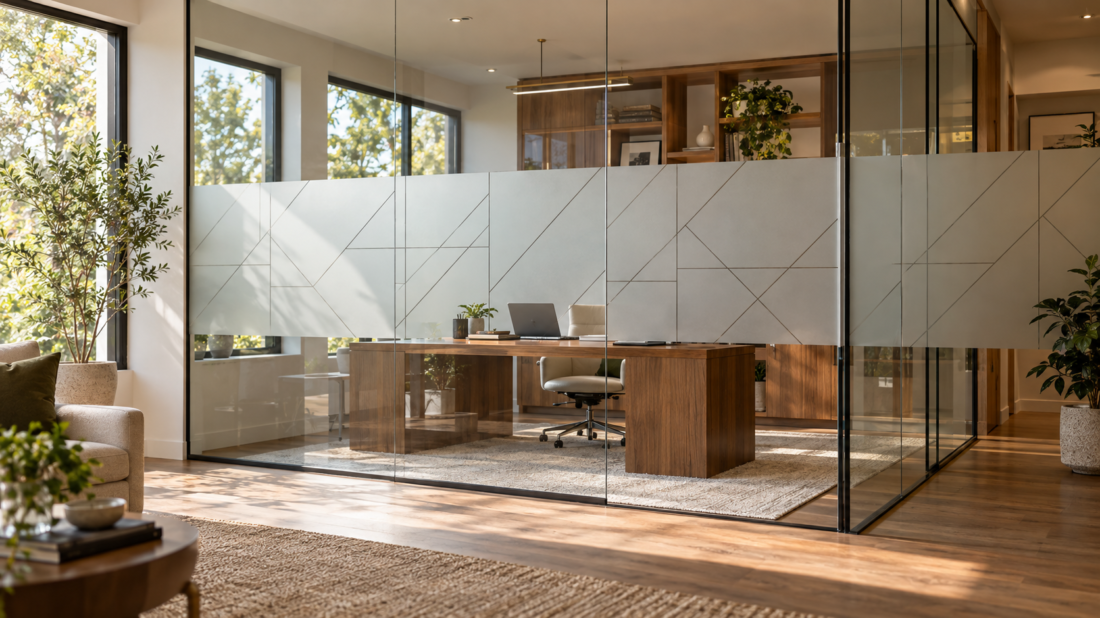
Lines, grids, and angular shapes give glass a contemporary look. Depending on the design, the film can cover the full pane or appear as a band or accent.
A sparse pattern leaves more of the glass uncovered and is mainly decorative. A denser pattern obscures more of the view. If privacy matters, check the pattern on the actual window before deciding.
Nature-Inspired Designs
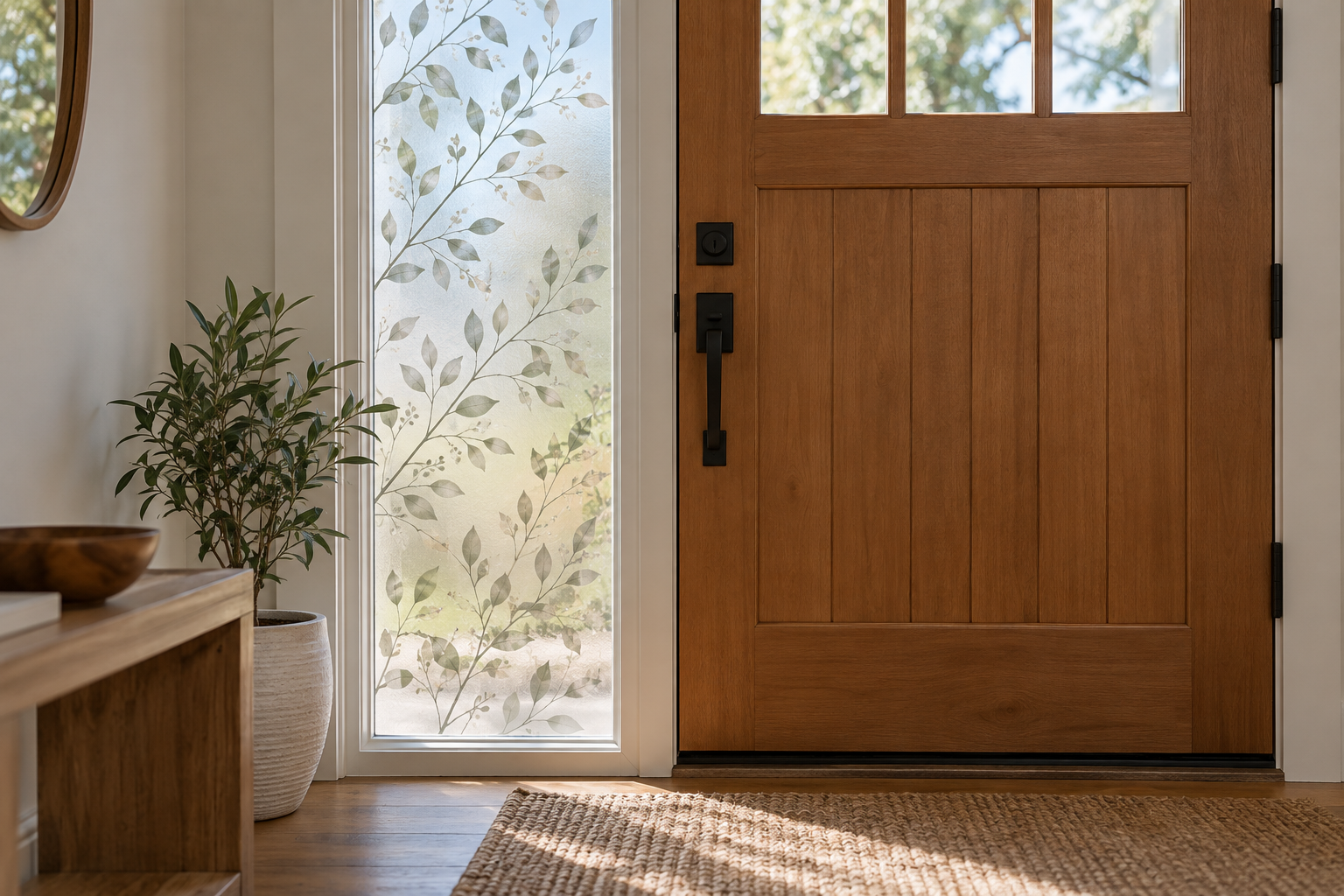
Leaf, botanical, and other organic patterns offer an alternative to geometric styles. They can suit residential rooms, spas, and wellness spaces where a softer decorative look is preferred.
Custom Graphics and Branding
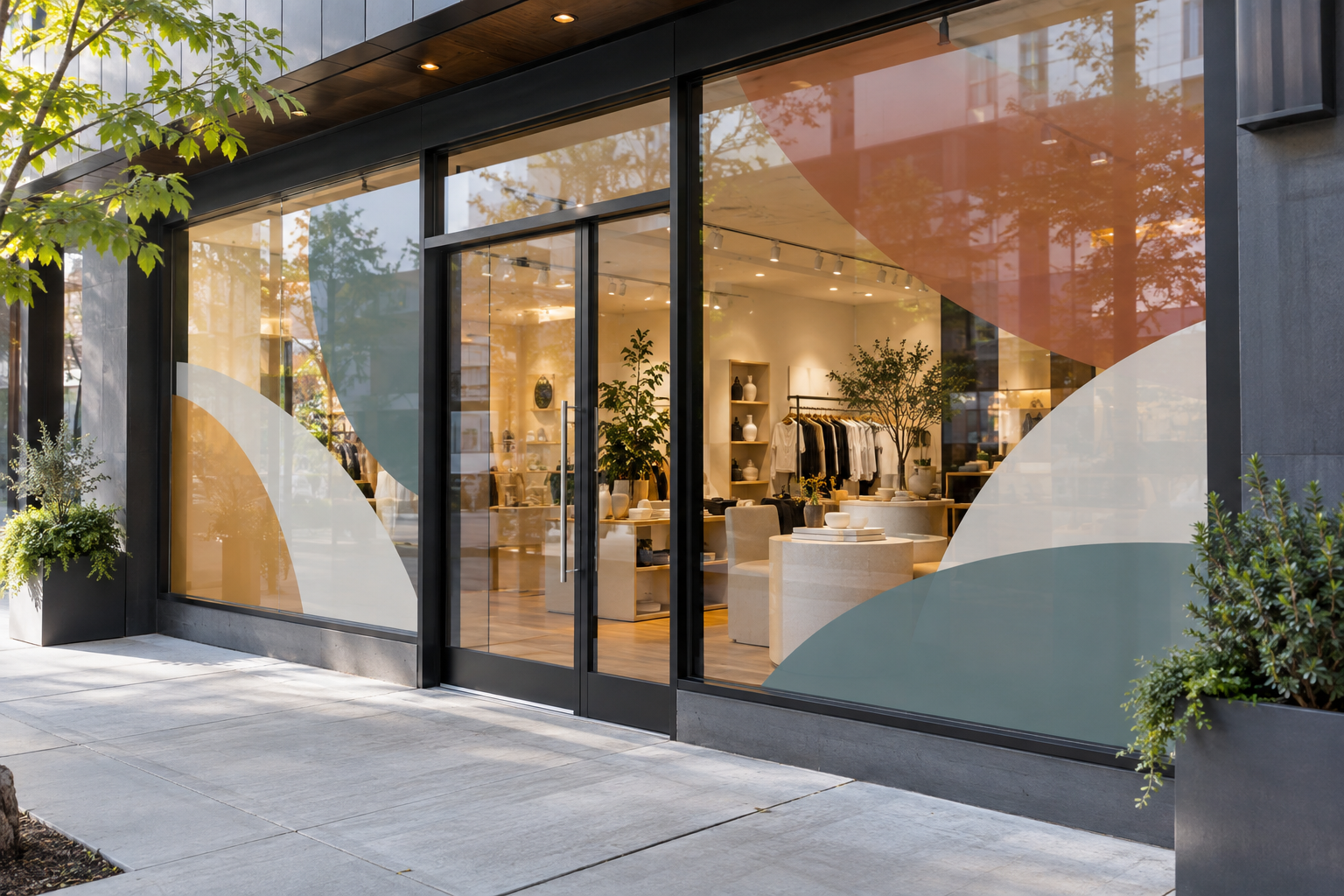
Custom graphics can include a logo, tagline, or original pattern. The artwork may need to be prepared for the glass size and shape, then reviewed in a proof before production.
Ask the provider what artwork files they need, how many revisions are included, and whether you will approve a final proof before the film is made.
Stained Glass and Decorative Color Film
Colored film can add a stained-glass-inspired look to entryways, front doors, and transom windows. The effect depends on the film’s color, pattern, and coverage.
Because color and coverage can change how light looks, request a sample and view it in the space before ordering.
Choosing a Design by Room or Space
For homes, consider how the room is used:
- Bathrooms: Frosted or etched-look film can obscure views through the glass.
- Home offices: A partial band or geometric pattern can add privacy while leaving some glass clear.
- Entryways: Colored or stained-glass-inspired designs can create a decorative focal point.
Commercial spaces have different needs:
- Conference rooms: Frosted bands and geometric patterns can add visual separation while keeping the glass feature.
- Storefronts: Custom graphics can display a logo or other brand elements.
- Lobbies: Nature-inspired or geometric film can add decoration without making privacy the main goal.
Balance Appearance and Privacy
A design that looks attractive may not provide the level of privacy you need. Pattern density and coverage affect how much of the view is obscured.
Sparse patterns leave more glass uncovered. Denser patterns or broader coverage obscure more of the view, although the result depends on the specific film and how it is installed. If privacy is important, review a sample from both sides of the glass.
The International Window Film Association’s aesthetics information covers decorative film styles, including stock patterns and custom graphics.
How Custom Designs Are Created
Custom projects generally follow these steps:
- Discuss the project. Share the window dimensions, intended use, design ideas, and any brand guidelines.
- Review a proof. The provider prepares a digital version for you to check.
- Request changes. Make adjustments before approving the artwork.
- Produce the film. The provider prepares the approved design for the measured glass.
- Schedule installation. Confirm timing and installation details with the provider.
Ask how long proofing and production typically take before choosing an installation date.
Coverage Options
- Full coverage: Applies film across the entire pane. Depending on the product, it can create a more consistent appearance or obscure more of the view.
- Partial coverage: Uses a band or section of film while leaving some glass clear.
- Border coverage: Places the design around the edges of the pane, usually as a decorative accent rather than a privacy treatment.
Cost Considerations
The total cost depends on the film, design, coverage area, artwork requirements, and installation. Catalog patterns may avoid custom artwork charges, while custom graphics can require additional design and proofing work.
Larger coverage areas generally require more material and installation time. Ask for an itemized quote that explains design, production, and installation costs.
Conclusion
Window film designs range from simple frosted finishes to custom graphics. Start with the purpose of the glass, then compare patterns and coverage that suit the space. Before ordering, review a sample, confirm what privacy or appearance to expect, and ask for a written quote.
Frequently Asked Questions
Can I combine multiple design styles on one window?
Yes. A project may combine a frosted band with a geometric pattern or custom graphic. Ask the provider to show how the elements will fit together in a proof.
How long does custom graphic approval take?
Timing varies with the design and the provider’s process. Ask about proofing, revisions, and production time before setting an installation date.
Will decorative patterns reduce natural light?
It depends on the film, pattern, and coverage. Review a sample in the room to judge its appearance and how much of the view it obscures.
Does custom branding film cost more than a standard pattern?
It may, because custom artwork and proofing can add work. The final price depends on the design, materials, coverage, and installation.
What is the difference between frosted film and etched-look film?
The terms can describe similar translucent appearances, but products vary. Ask to see samples so you can compare texture, opacity, and finish.
Can decorative film be removed or changed later?
Many decorative films can be removed, but the process and result depend on the product and glass. Check the manufacturer’s care and removal guidance before installation.
Are geometric patterns suitable for homes?
Yes. Geometric designs can work in homes as well as offices. Choose the pattern and coverage based on the room’s style and privacy needs.
Is stained-glass film as durable as real stained glass?
They are different materials, so do not assume they have the same durability. Ask about the film’s expected service life, care instructions, and warranty.
Can window film be used on curved or unusually shaped glass?
Some projects can accommodate nonstandard shapes, but requirements vary. Provide measurements and photos so the installer can assess the glass and design.
Do commercial spaces need different coverage than homes?
Not necessarily. Coverage should match the purpose of the space. Businesses may choose prominent branding, while homes may favor partial coverage, but either can use a range of designs.
Ready to Explore Design Options for Your Space?
Share the type of space, your main goal, and the approximate glass dimensions. Contact us to discuss design options for your project.