info@michgc.com


How to Choose Commercial Window Tinting for Your Business
The right commercial window tinting depends on what each glass area needs to do. Offices may need glare control, retail stores may want branded graphics, and medical or professional offices may need to obscure views into private areas. The right product also depends on the glass, window location, and film specifications.
This guide compares common priorities by business type and explains how to assess spaces with more than one need.
Key Takeaways
- Choose commercial window film based on each window’s goal, not business type alone.
- Solar-control film may help manage heat and glare when selected for the glass and conditions.
- Decorative and graphics films can add privacy, branding, or design.
- Privacy film can obscure views, but it does not ensure regulatory compliance on its own.
- Select safety and security film for its intended application and installation requirements.
The Short Answer
Start by identifying what each area of glass needs to do: manage heat or glare, provide privacy, display branding, or address a glass-safety concern.
Then compare products based on their specifications, compatibility with your glass, and installation requirements. A single business may need different films in different areas.
Why Business Needs Affect Film Selection
Glass serves different functions across a commercial property. Exterior windows may affect glare, heat, and the building’s appearance. Interior glass may need privacy or branding. Entryways and high-traffic areas may call for an assessment of glass-safety needs.
Business type can help identify likely priorities, but it does not determine the right product on its own. Consider how each space is used, what the glass faces, and what performance you expect.
Office Spaces: Glare and Interior Privacy
Office windows can cause screen glare or create uncomfortable hot spots. A solar-control film may help manage glare and solar heat, depending on the product and glass. Check the product data and have the windows assessed before choosing.
Interior glass partitions may also need privacy for conference rooms or private offices. Frosted or patterned decorative film can obscure views while allowing light through, with the level of privacy depending on the design.
Retail Storefronts: Branding and Sun Exposure
Storefront glass can support branding through custom graphics, logos, or promotional designs. Custom graphics film can turn suitable glass areas into branded displays.
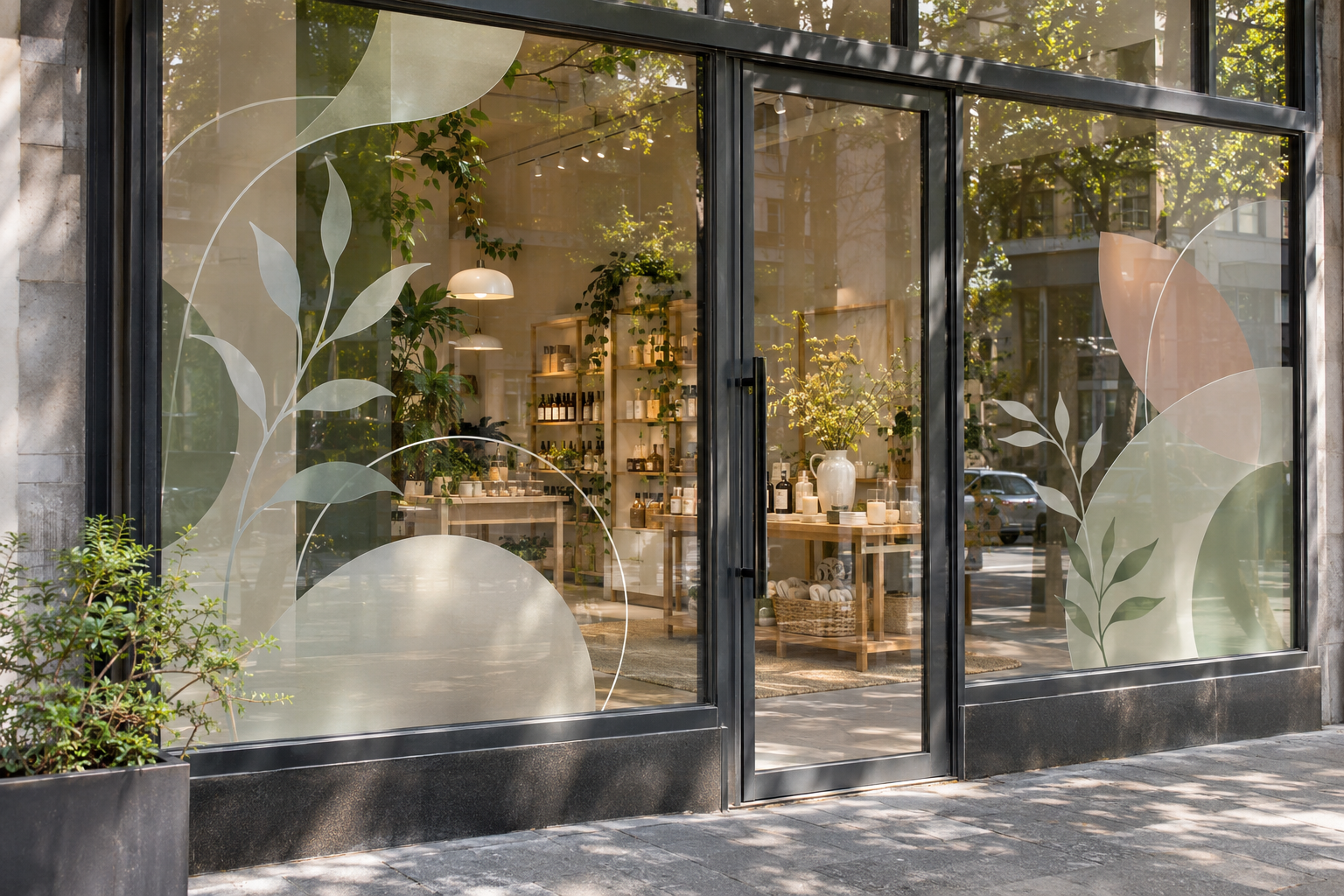
Sun exposure may also affect merchandise near windows. If UV reduction is a goal, choose a product with specifications for UV performance. Film may help reduce one contributor to fading, but it cannot prevent all fading. A store may use graphics on some panes and a separate solar-control product on windows exposed to strong sun.
Medical and Professional Offices: Visual Privacy
Clinics, law firms, and other professional offices may need to limit views into consultation rooms, exam areas, or other private spaces. Frosted, patterned, or opaque film can obscure the view through selected windows or partitions.
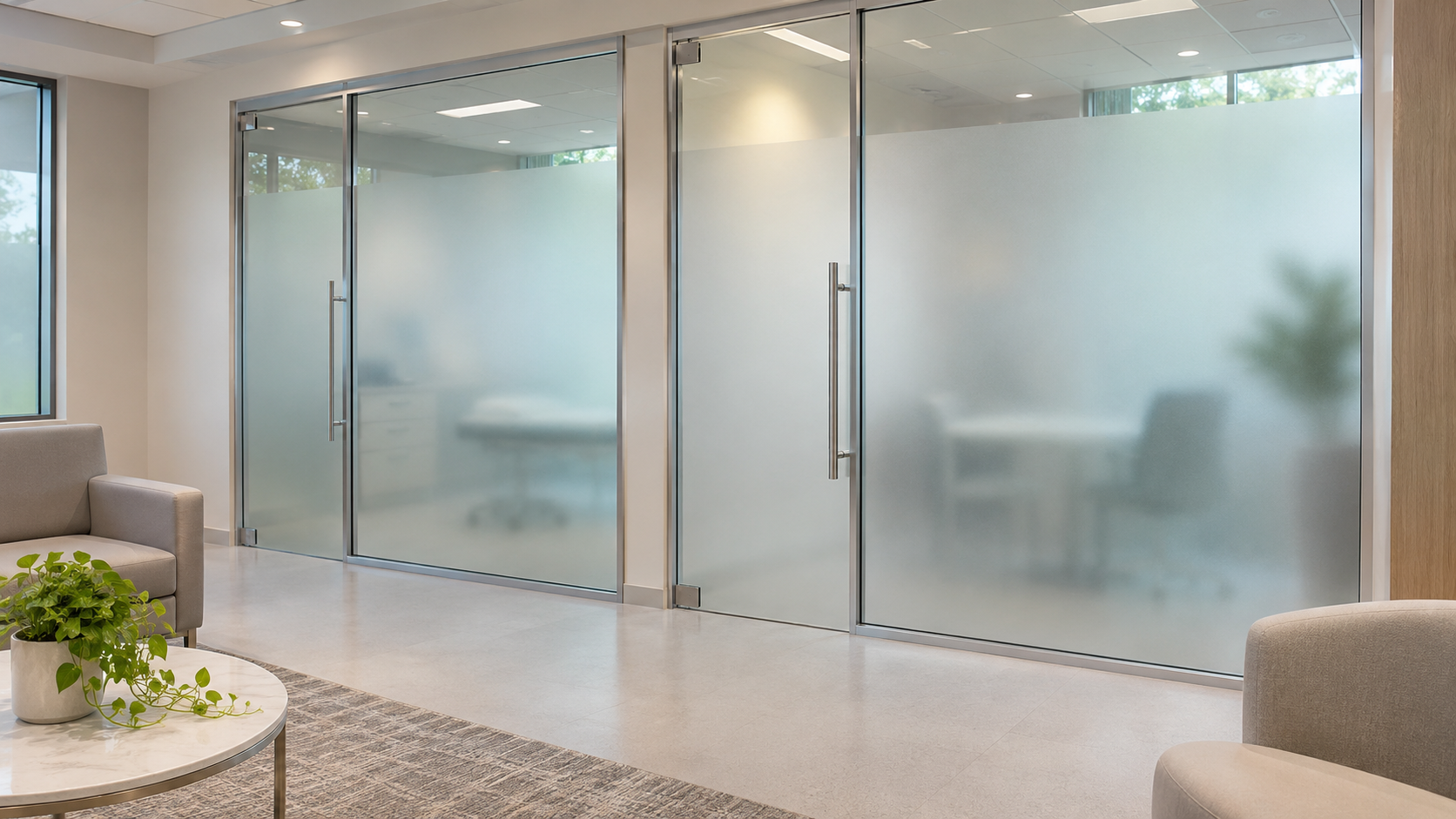
Film can support visual privacy, but it does not by itself guarantee compliance with confidentiality laws or workplace requirements. Review each space’s needs with the appropriate compliance professional, and ask an installer to recommend a film based on the required level of visual screening.
Restaurants and Hospitality: Comfort and an Open Feel
Restaurants and hotels may want to manage glare or heat while preserving natural light and views. Solar-control films vary in visible-light transmission and appearance, so compare specifications and view samples before selecting a product.
The goal is to balance comfort with the atmosphere you want. A lighter-looking film may suit a glass-forward dining area, while a separate decorative treatment may be more appropriate for a private room or service area.
Schools and Institutional Spaces: Use and Glass-Safety Goals
Schools, government buildings, and other institutions may have different requirements for classrooms, entrances, offices, and common areas. Consider traffic, visibility, comfort, and any glass-safety goals for each location.
Safety and security films are not interchangeable with solar-control or decorative films. Ask the manufacturer or qualified installer about the specific product, glass, attachment method, and intended application. A product name alone does not establish that an installation meets a particular safety requirement.
Planning for a Business With Different Space Types
Many properties combine several uses. A retail store may have a customer-facing storefront and private staff areas. A restaurant may have a glass dining room and an office where privacy matters.
Assess each area separately before choosing film. 3M’s commercial building window film overview describes distinct product categories for sun control, safety and security, and decorative finishes. Review the specifications for the products under consideration and confirm compatibility with your glass.
Comparison Table
| Business Type or Area | Common Priority | Film Category to Assess |
|---|---|---|
| Office | Glare, solar heat, or conference-room privacy | Solar-control or decorative film |
| Retail storefront | Branding, sun exposure, or merchandise display | Custom graphics or a product with documented UV performance |
| Medical or professional office | Visual privacy | Frosted, patterned, or opaque decorative film |
| Restaurant or hospitality | Glare and heat while preserving daylight | Solar-control film selected for the desired light level |
| School or institution | Comfort, privacy, or a defined glass-safety goal | Product chosen for the specific application and glass |
Conclusion
Choose commercial window film by assessing each glass area and the job it needs to do. Offices may focus on glare and privacy, retailers on branding and sun exposure, professional practices on visual privacy, and restaurants on comfort and daylight. Schools and institutions may have additional requirements for high-traffic areas. Confirm product specifications, glass compatibility, and installation requirements before selecting a film.
Frequently Asked Questions
Can one film meet every business need?
Usually, different goals call for different product categories. Some products may offer more than one documented benefit, so check the specifications for the exact film.
Is glare reduction important in an office?
It may be, especially where sunlight makes screens difficult to view. An installer can assess the windows and compare solar-control options.
Can a small retail shop use custom graphics film?
Yes. Graphics can be designed for a small storefront or a larger commercial property. The design depends on the available glass and branding goals.
Does privacy film ensure medical confidentiality?
No. Film can obscure views through glass, but it does not by itself ensure compliance with privacy or confidentiality requirements. Review the full requirements for your practice.
Will solar-control film make a restaurant feel closed off?
That depends on the product. Compare visible-light transmission, reflectivity, and sample appearance to see how a film may affect the space.
What if my business has more than one type of space?
Assess each area separately. A storefront, office, conference room, and entryway may have different needs.
Should I treat every window in the building?
Not necessarily. Prioritize the windows with a clear need, then ask an installer whether treating additional areas would improve consistency or performance.
Do schools and government buildings need different films from offices?
Their needs may differ by location and use. Identify the film’s purpose and confirm product suitability, glass compatibility, and installation requirements.
When should a business reassess its existing window film?
Consider a review after a renovation, expansion, rebrand, change in room use, or when the current film no longer meets the space’s needs.
Is a professional assessment useful before choosing a film?
Yes. An installer can assess the glass, layout, exposure, and goals, then explain which product categories are suitable.
Ready to Find the Right Film for Your Business?
Each space can have different priorities. Contact Michigan Glass Coatings to discuss your property and your window goals.